Sliding Glass Door Repair
Track Repair for Sliding Glass Door Repair
A damaged riding surface can make a sliding glass door catch or grind, but worn rollers can cause similar symptoms. We inspect both before recommending track repair, a suitable cap or a different repair.
Track damage or worn rollers?
A door that catches in the same spot needs a different assessment from one that feels heavy throughout its travel. Neither symptom alone proves which part has failed.
Catching at a repeatable point
Dents, gouges, flattened areas or corrosion on the riding surface can interrupt movement. We check the affected area and how the rollers pass over it.
Heavy movement across the opening
Worn rollers or panel-height problems can create resistance across much of the travel. Track and roller condition need to be assessed together.
When track repair or capping is suitable
We inspect the riding surface, threshold condition, rollers, panel height and closing alignment. A repair or cap is appropriate only when the existing condition supports it; some damaged sills need a different recommendation.
New rollers alone may not resolve a damaged riding surface. We explain the proposed track work and any related repair before the scope is agreed.
What we check after track work
After the agreed repair, we check panel travel through the opening, repeatable catching, alignment and lock engagement. A smoother surface should be assessed with the door operating on it.
Related repair guides
Review common symptoms, repair factors, and next steps before scheduling service.
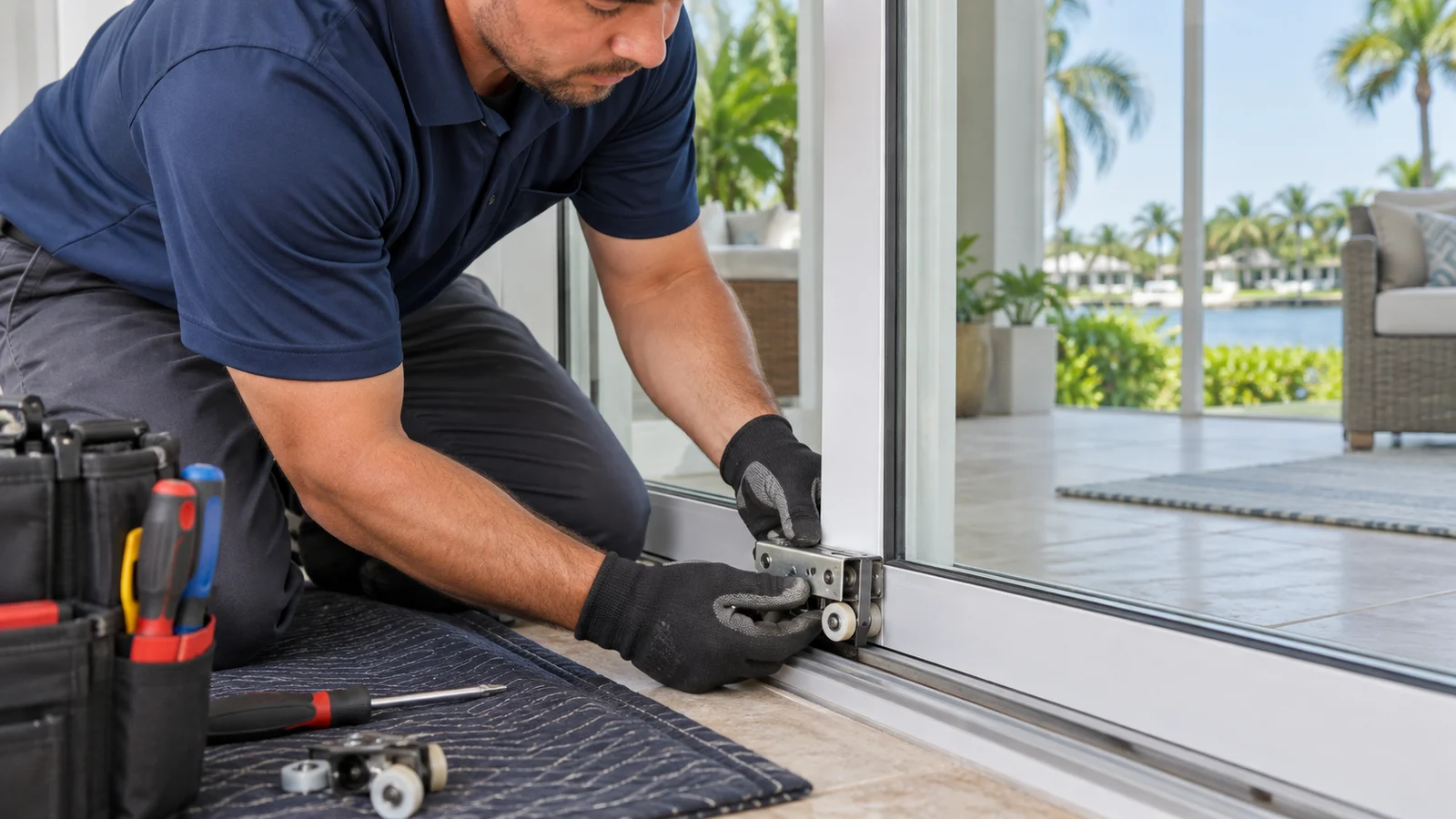
Patio Door Roller Replacement in Tampa Bay: When a Heavy Door Stops Gliding
A patio door that drags, grinds, jumps, or needs to be lifted before it locks often has worn rollers or related track damage. Learn when to schedule patio door roller replacement in Tampa Bay.
Read guide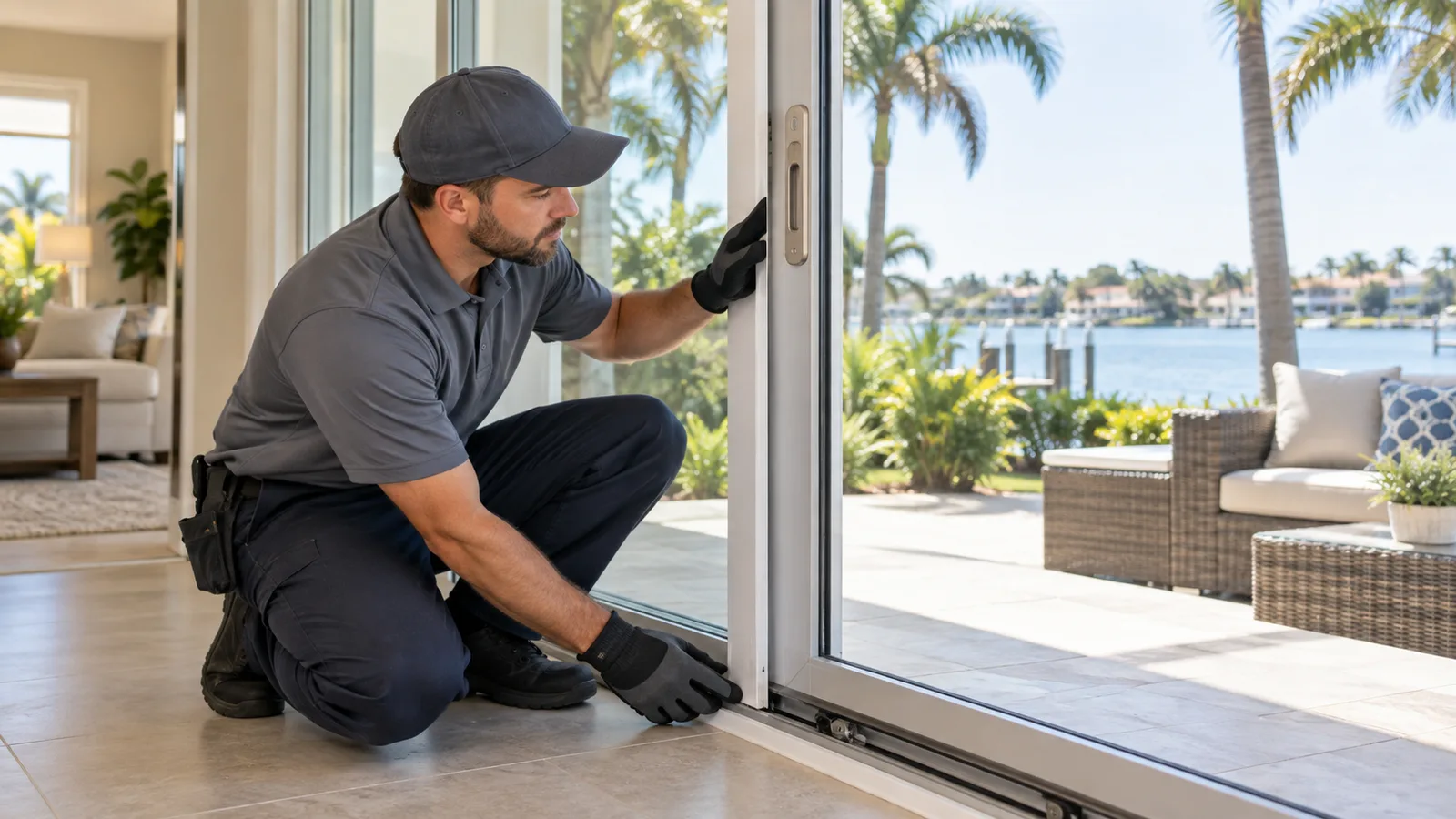
Sliding Door Alignment Repair in Tampa Bay: When the Panel Will Not Close Square
A sliding door that closes crooked, leaves gaps, misses the latch, or rubs the frame can point to alignment, roller, track, or lock issues. Here is when Tampa Bay homeowners should schedule repair.
Read guide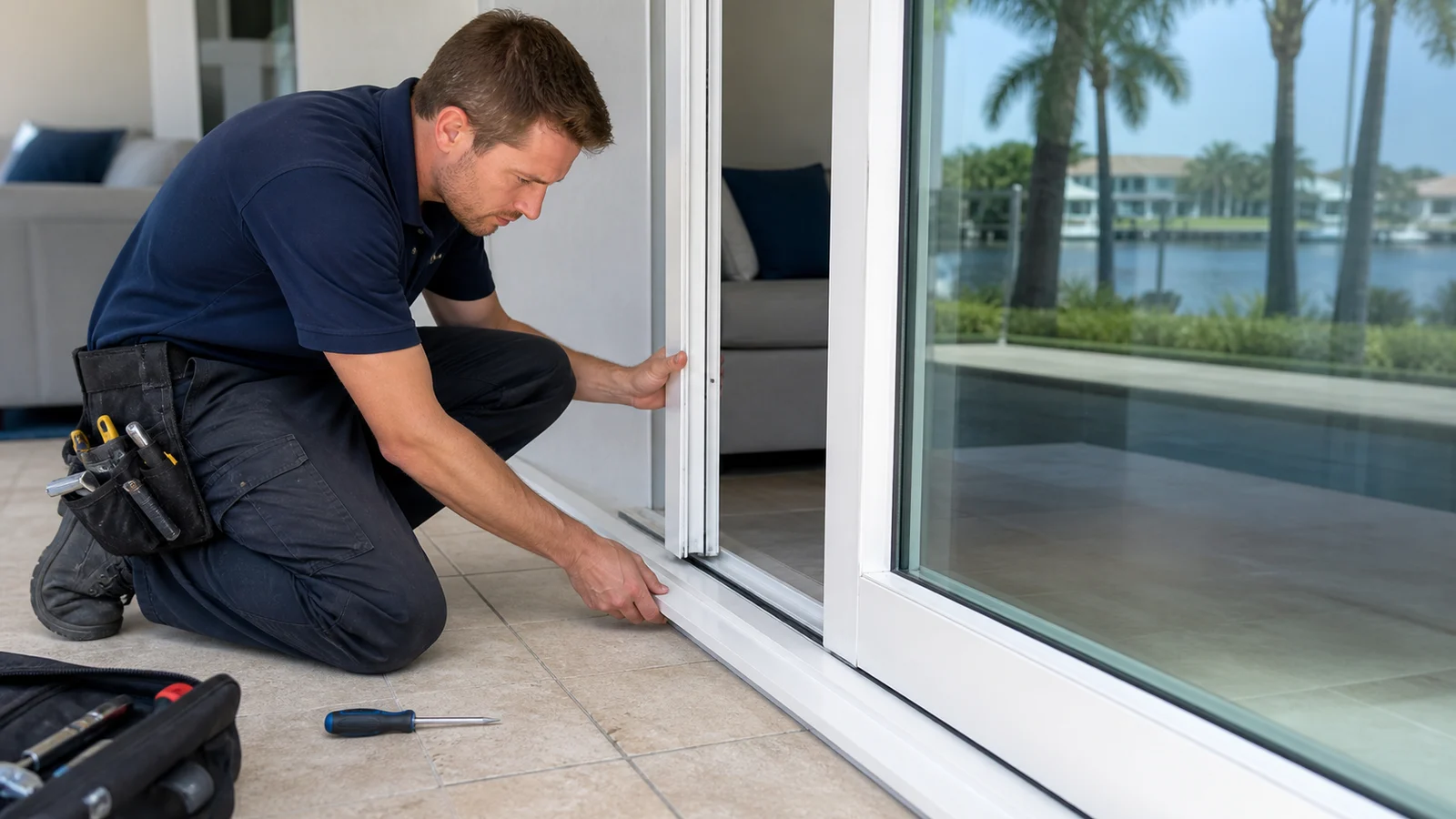
Sliding Door Off Track Repair in Tampa Bay: When the Panel Slips, Jumps, or Will Not Close
A sliding door that jumps, slips out of the track, rubs the frame, or will not close squarely can point to roller failure, track damage, or alignment issues. Here is when Tampa Bay homeowners should schedule repair.
Read guide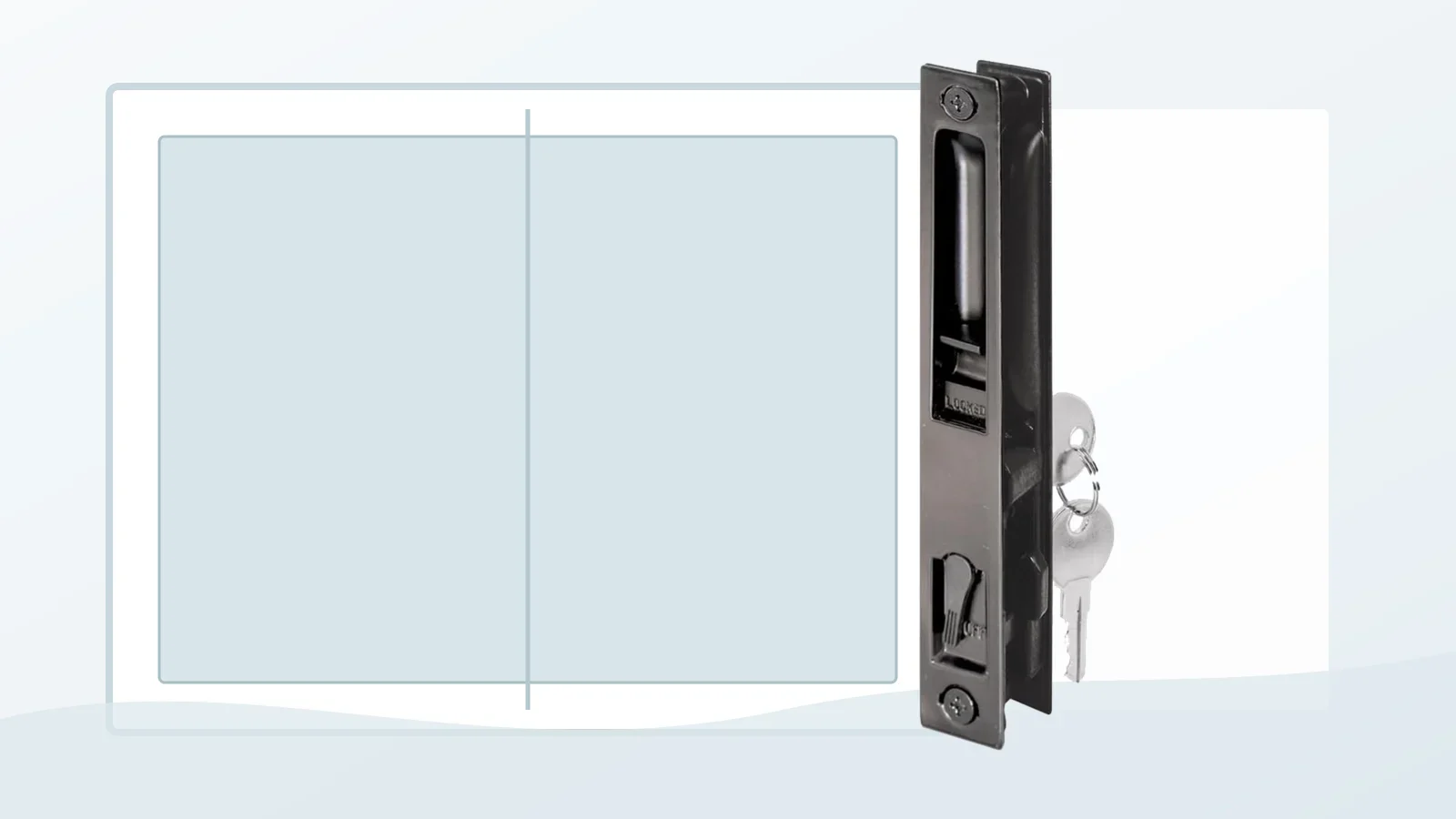
Sliding Door Latch Repair in Tampa Bay: When the Door Will Not Catch or Stay Locked
A sliding door that will not latch can point to lock wear, keeper misalignment, roller drag, track damage, or handle strain. Here is when Tampa Bay homeowners should schedule repair.
Read guide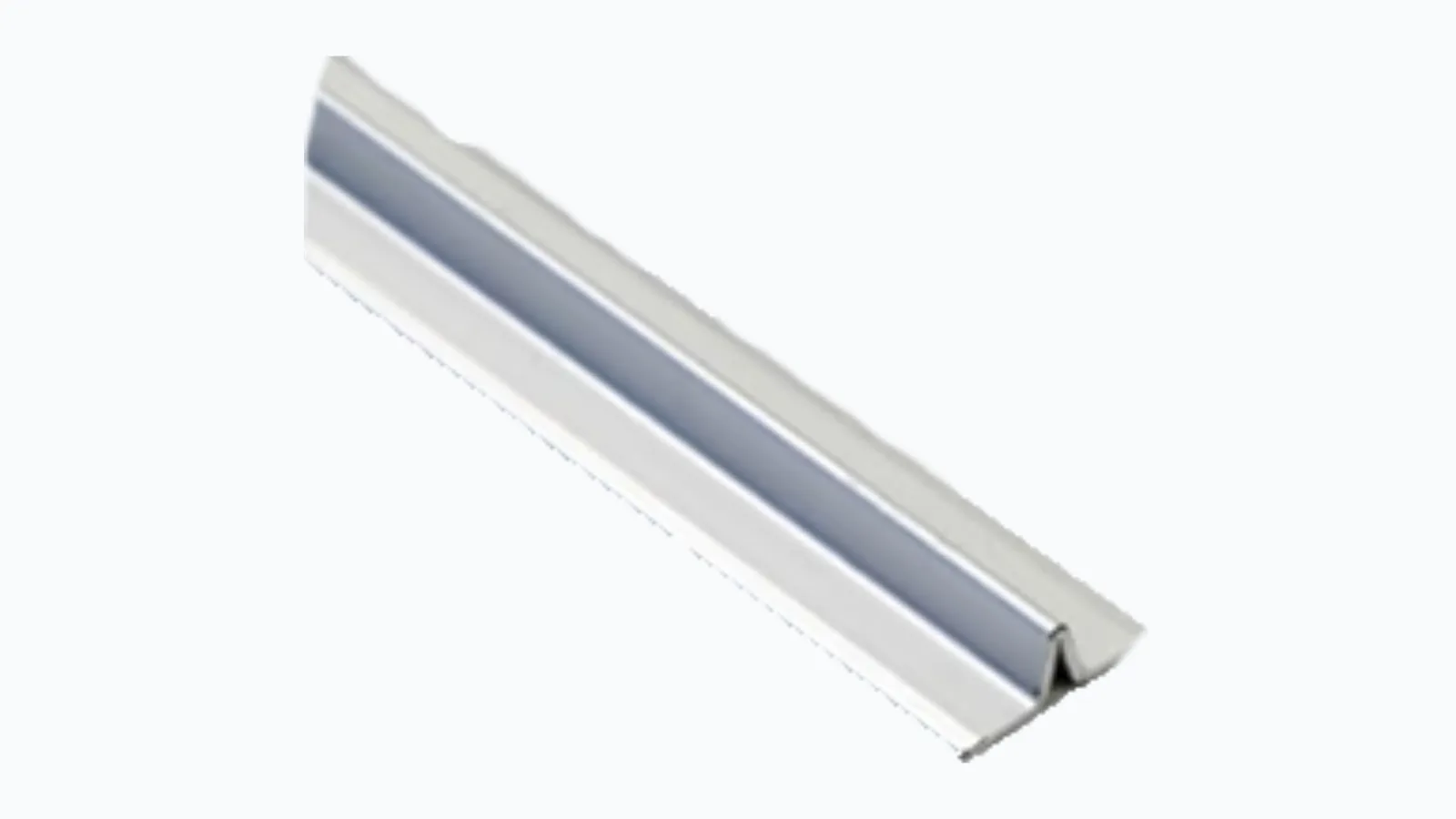
Bent Sliding Door Track Repair in Tampa Bay: When the Track Cap Is the Problem
A bent, gouged, or flattened sliding door track can make the panel grind, jump, or stop locking cleanly. Here is when Tampa Bay homeowners should schedule track cap repair.
Read guide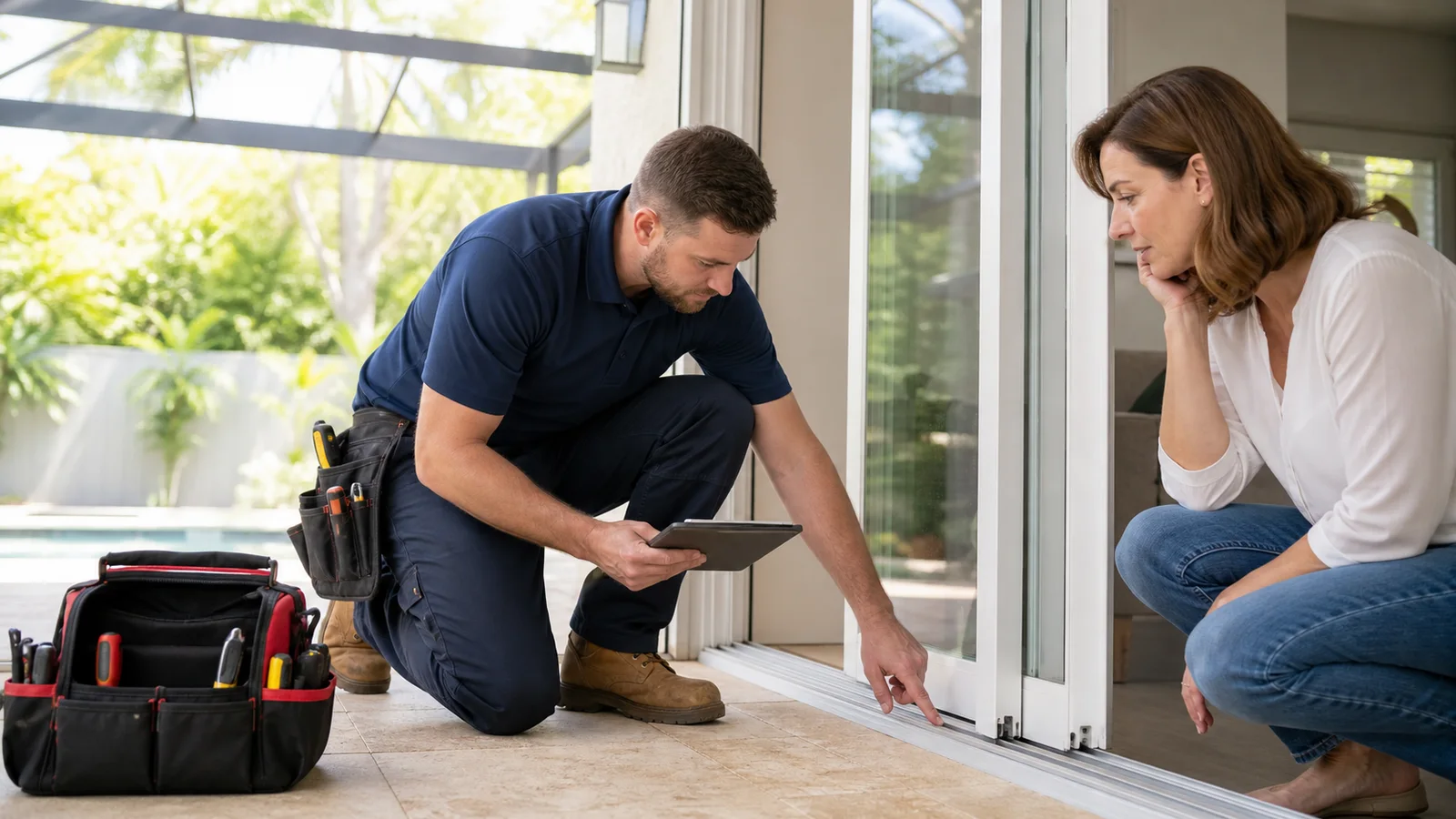
Sliding Door Repair Cost in Tampa Bay: What Affects the Price?
Sliding door repair cost depends on the door symptoms, rollers, track condition, lock alignment, handle hardware, corrosion, and whether multiple parts are wearing together.
Read guide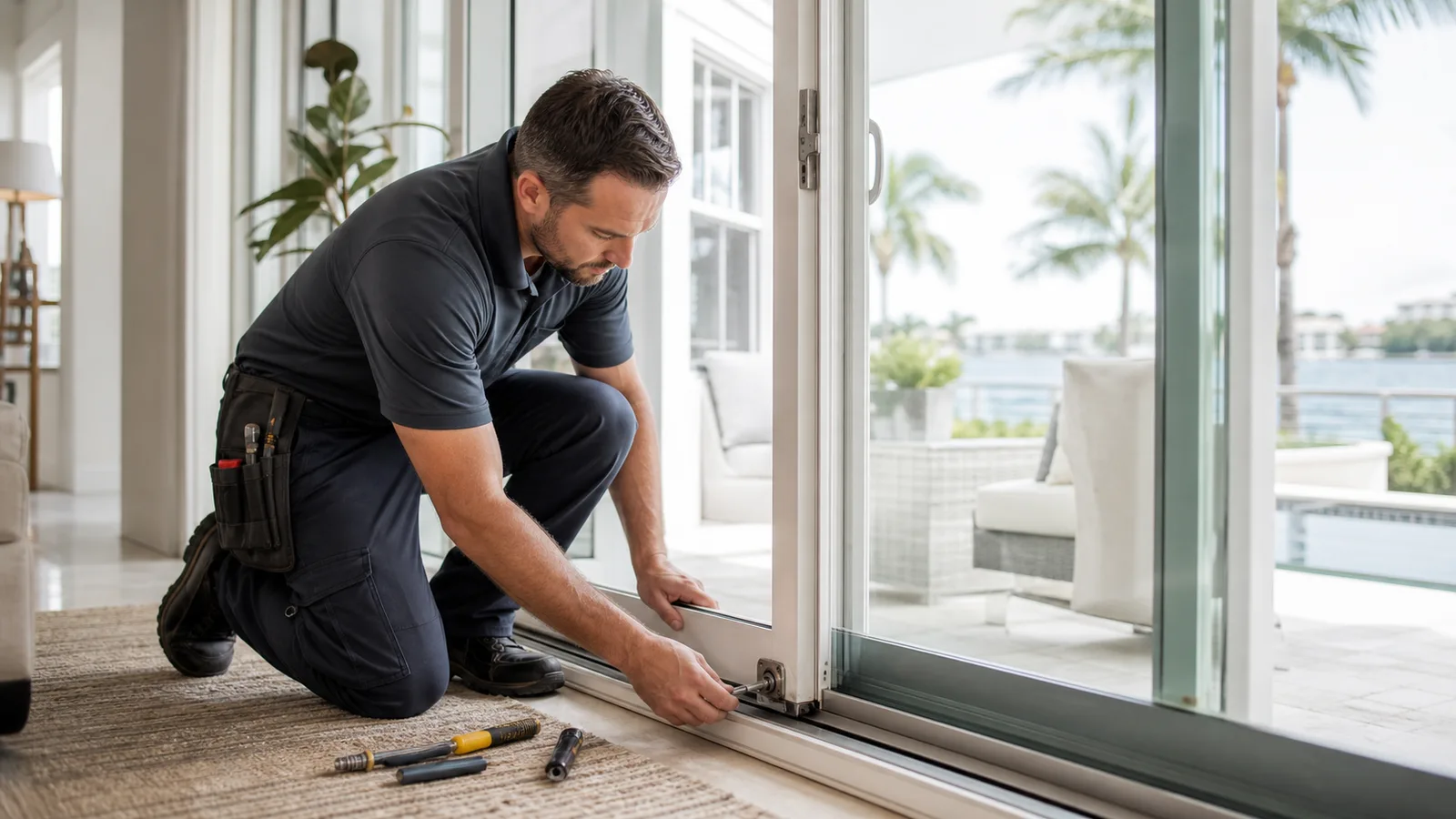
Sliding Door Repair Service Near Me in Tampa Bay: When to Schedule a Pro
Searching for sliding door repair service near you usually means the door is already dragging, grinding, sticking, or failing to lock. Here is when Tampa Bay homeowners should schedule professional repair.
Read guide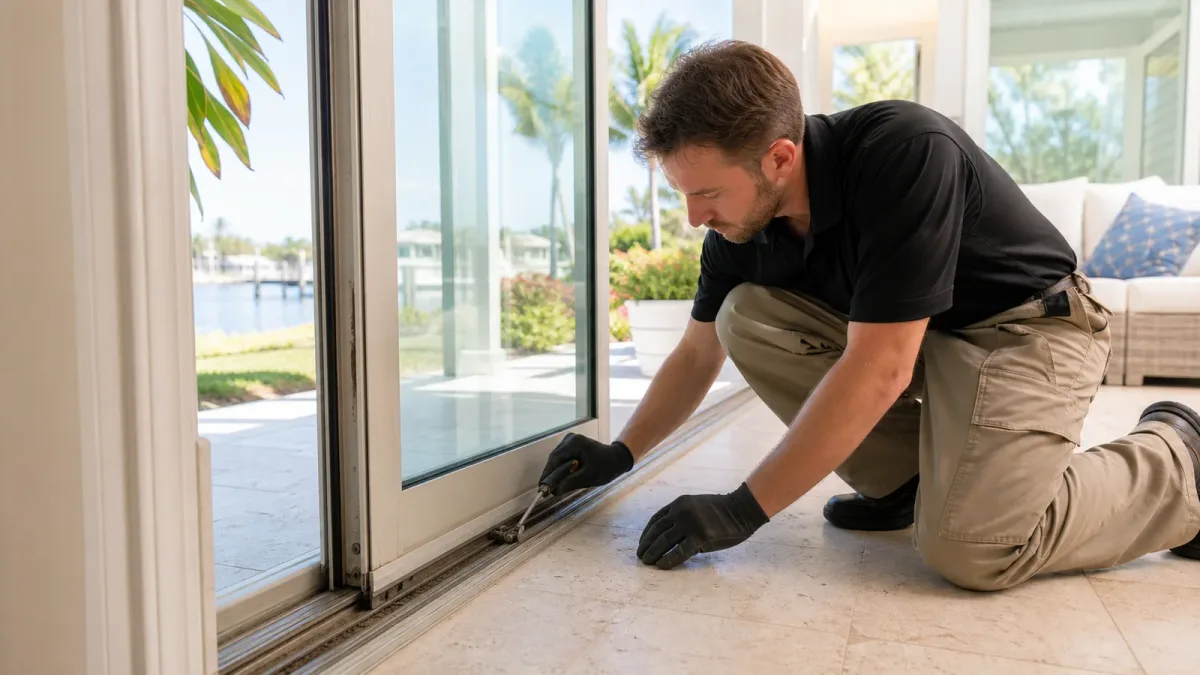
Sliding Door Roller Replacement in Tampa Bay: Signs Your Door Needs Service
Worn sliding door rollers can make a patio door drag, grind, scrape, or stop locking correctly. Here is when Tampa Bay homeowners should schedule roller replacement before track damage spreads.
Read guide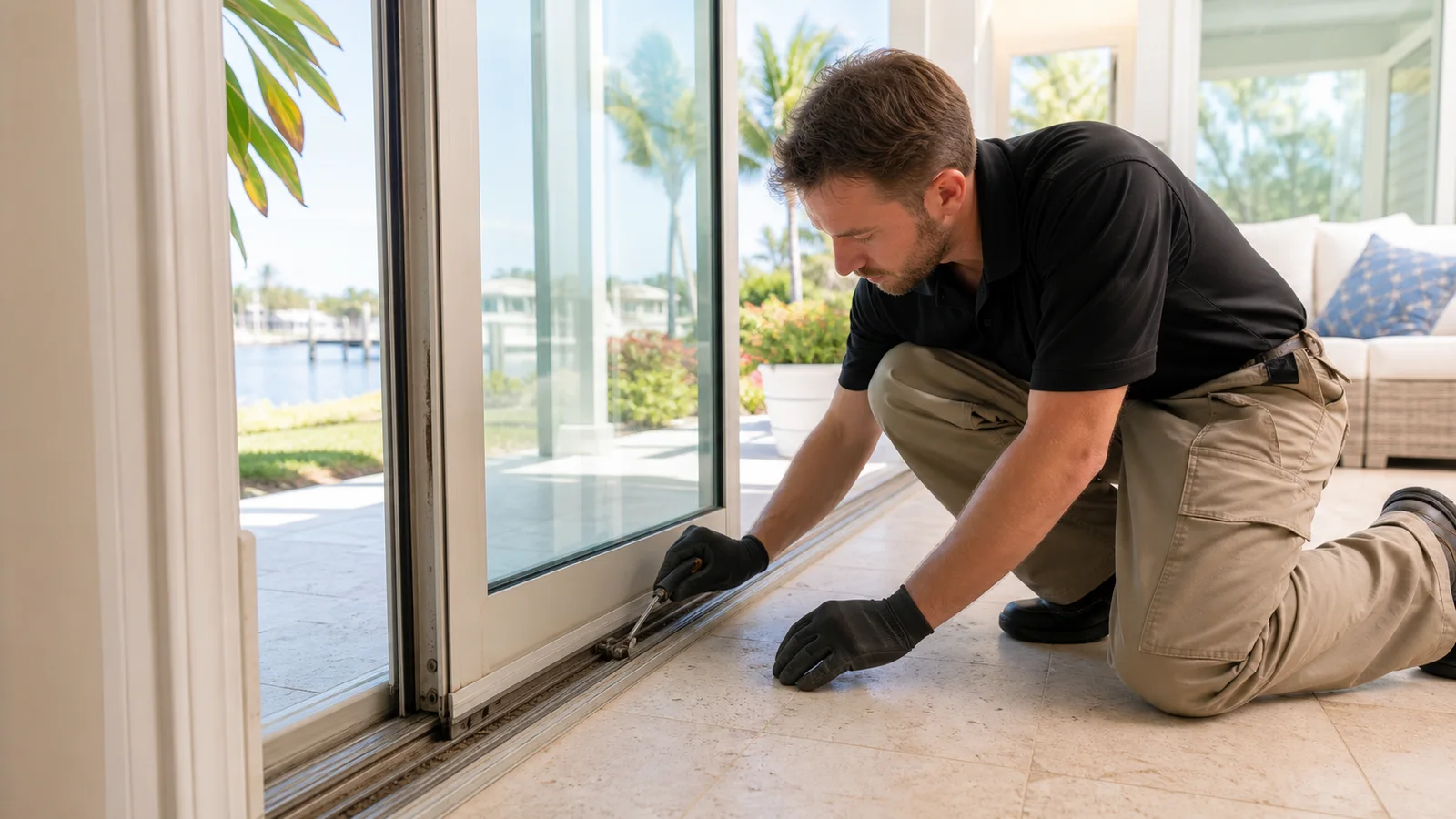
Sliding Door Track Repair in Tampa Bay: Signs the Track Is the Real Problem
A damaged sliding door track can make the whole panel drag, grind, or stop locking correctly. Here is when Tampa Bay homeowners should book track repair before the damage spreads.
Read guide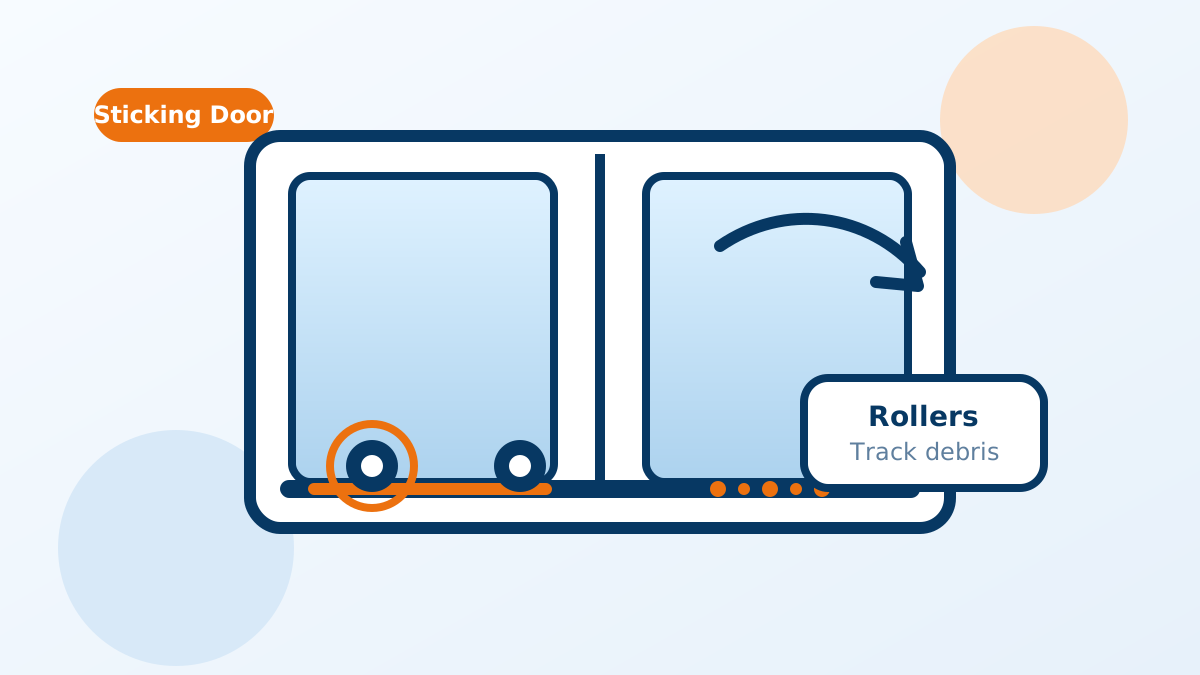
Why Is My Sliding Door Hard to Open? Common Causes in Tampa Bay Homes
A hard-to-open sliding door usually points to worn rollers, a damaged track, debris buildup, or alignment problems. Here is how Tampa Bay homeowners can tell what is going on.
Read guide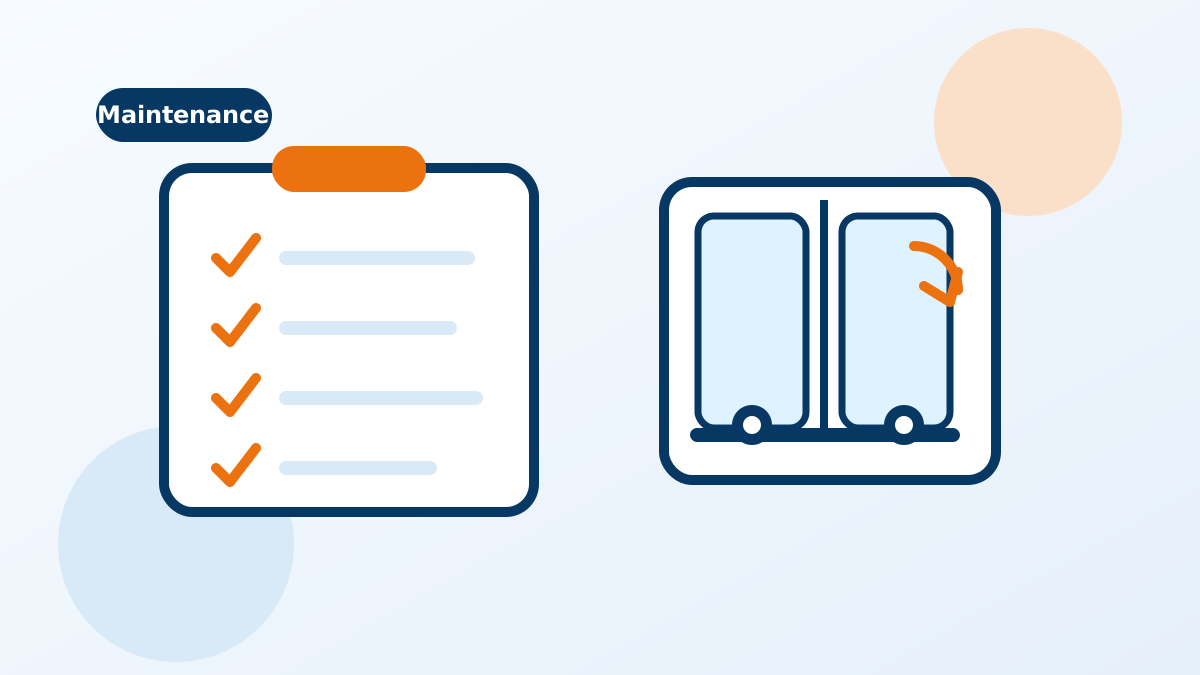
Tampa Sliding Door Maintenance Checklist
Seasonal checklist to keep sliding glass doors and windows gliding smoothly in Tampa Bay's coastal climate.
Read guideCities we serve for Track Repair
Book Track Repair in any of our nearby cities.

Track Repair FAQs
Can a bent sliding-door track be repaired?
Some riding surfaces can be repaired or capped, while other damage calls for a different approach. The threshold, rollers and panel alignment must be inspected before recommending the work.
Will replacing the rollers fix a damaged track?
Not necessarily. New rollers can still catch on a damaged surface, and track work alone may not resolve worn rollers. Both need to be checked.
Why does my door catch in the same spot?
A dent or other riding-surface defect may be involved, but debris, roller condition and alignment can also affect travel. An assessment identifies the cause.