
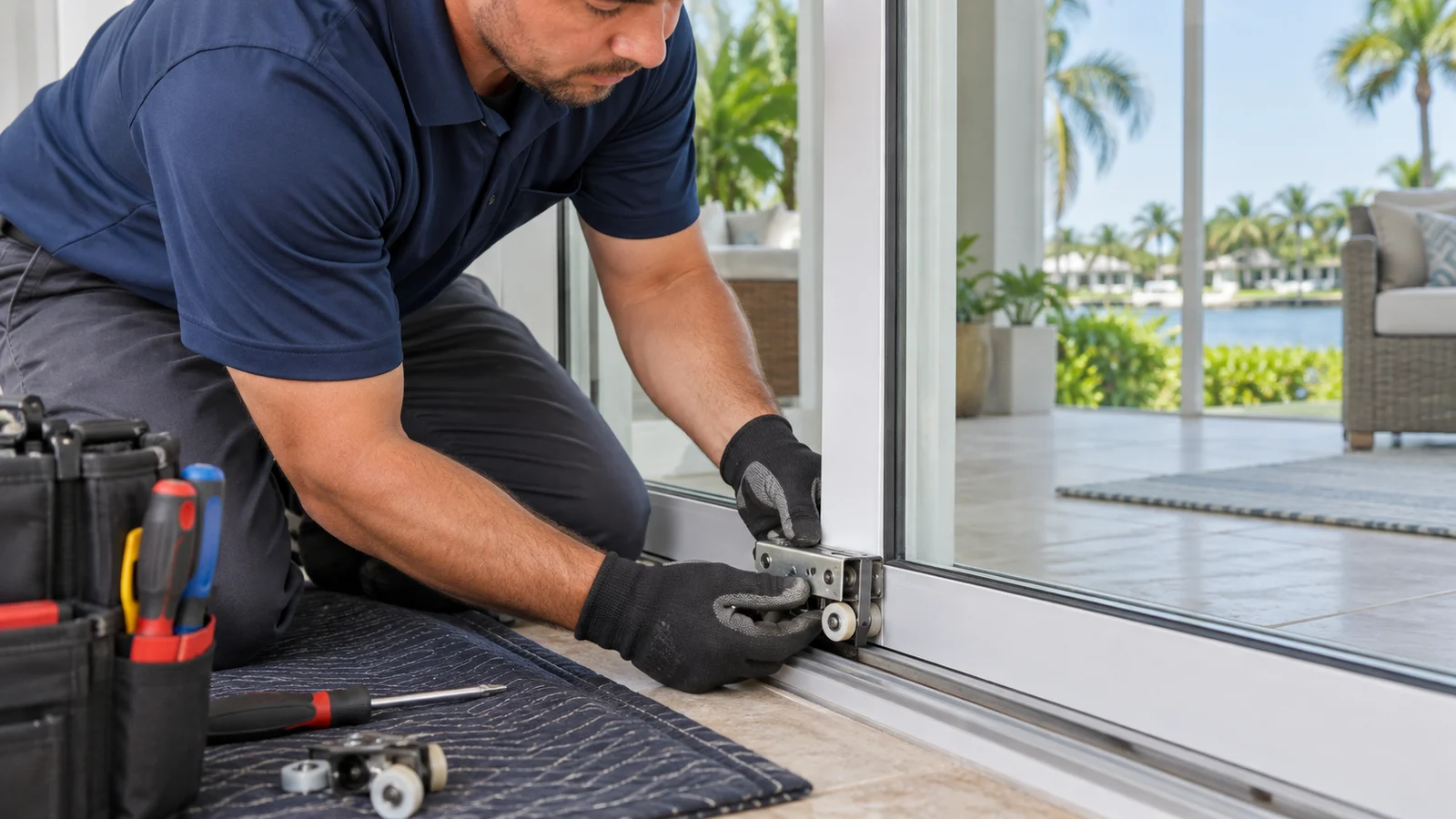
A patio door should not feel like a workout every time you open it. If the panel drags, grinds, jumps, or only closes after being lifted, the rollers under the door may be worn, corroded, cracked, or no longer carrying the panel weight correctly.
In Tampa Bay homes, patio door roller problems often show up on lanai doors, pool sliders, condo balcony doors, rental-property sliders, and older doors exposed to humidity, sand, and salt air. The repair is not just about swapping one small part. The roller, track, panel height, lock alignment, and door weight all need to be checked together so the door glides without creating another problem.
Signs your patio door rollers may be failing
Schedule a patio door repair visit when you notice:
- the door feels heavier than it used to
- the panel scrapes, grinds, or bumps along the bottom track
- the door moves smoothly in one area but catches in another
- you have to lift the panel to close or lock it
- the lock misses unless the door is pushed hard
- one side of the panel sits lower than the other
- the track has black dust, metal shavings, dents, or rough spots
- the door jumps, wobbles, or feels unstable while sliding
- the problem returns quickly after cleaning the track
These symptoms can start small, but they usually get worse as the rollers keep riding on the same damaged surfaces. A heavy patio panel can keep moving for a while even when the rollers are failing, which is why many homeowners wait until the door becomes almost impossible to use.
Why worn patio door rollers should be handled early
Rollers carry the weight of the door. When they flatten, seize, corrode, or lose adjustment, the panel drops lower and starts putting pressure on the track, frame, lock, and handle.
Waiting can lead to:
- deeper grooves in the track
- flat-spotted or broken rollers
- damage to the lower rail of the door
- a patio door that will not sit square in the opening
- lock and keeper misalignment
- extra strain on handles and latch hardware
- gaps that affect security, weather sealing, and ease of use
- a repair that becomes larger than roller replacement alone
If the door already needs to be lifted or shoved, schedule patio door roller replacement before the panel causes more track damage.
Roller replacement is connected to track condition
A common mistake is assuming every hard-to-open patio door only needs new rollers. Sometimes it does. Other times, the rollers failed because the track surface is worn, bent, dirty, corroded, or uneven.
New rollers will not perform correctly if they have to ride over a damaged track. That is why Tampa Bay Sliding Doors checks whether track repair is needed with the roller work. The goal is smooth travel across the full opening, not a short-lived improvement that fails again after a few weeks of normal use.
Why this is not a good DIY guessing game
Patio doors are heavy, and the correct roller setup depends on the door system, panel weight, existing hardware, adjustment range, and condition of the track. A roller that looks close can still ride poorly, sit at the wrong height, or leave the lock out of alignment.
Customers should not have to remove a heavy panel, search for parts by trial and error, or risk damaging the frame. A service visit should identify the roller type, inspect the riding surface, check the panel height, and confirm that the door closes and locks after the repair.
For many Tampa Bay homes, the right repair may include sliding door roller replacement, track work, and adjustment together.
Patio door dragging, grinding, or refusing to lock? Tampa Bay Sliding Doors can inspect the rollers, lower track, panel height, and lock alignment so the repair fixes the cause instead of only making the door move for a few days.
Schedule patio door roller repairWhat Tampa Bay Sliding Doors checks during service
During a patio door roller replacement visit, the technician may inspect:
- how the door moves from fully open to fully closed
- whether the panel sits level in the frame
- roller condition, bearing movement, height, and corrosion
- the lower track surface, high spots, grooves, dents, and worn caps
- signs of sand, salt-air corrosion, water exposure, or repeated forcing
- whether the lock and keeper line up after the panel is reset
- whether the handle or latch has been strained by the heavy door
- whether the issue is limited to rollers or part of a broader sliding door repair problem
The final repair recommendation depends on what the door is doing today, how much damage has already occurred, and whether the track can support the new rollers properly.
Tampa Bay conditions make roller problems common
Humidity, sand, rain, salt air, and indoor-outdoor traffic are hard on patio door hardware. Doors near pools, lanais, balconies, and coastal air can develop corrosion and track wear faster than homeowners expect.
That does not mean the entire door needs to be replaced. If the glass and frame are sound, roller replacement and track repair can often restore a patio door that feels too heavy, noisy, or unreliable.
When to call for patio door roller replacement
Call when the door drags, grinds, jumps, leans, sticks after cleaning, will not close squarely, or needs to be lifted before it locks. Those are service-call symptoms because the panel weight, roller condition, and track condition need to be diagnosed together.
If your patio door is getting harder to use, request service online and Tampa Bay Sliding Doors can inspect the roller system before the door damages the track, lock, or frame.