
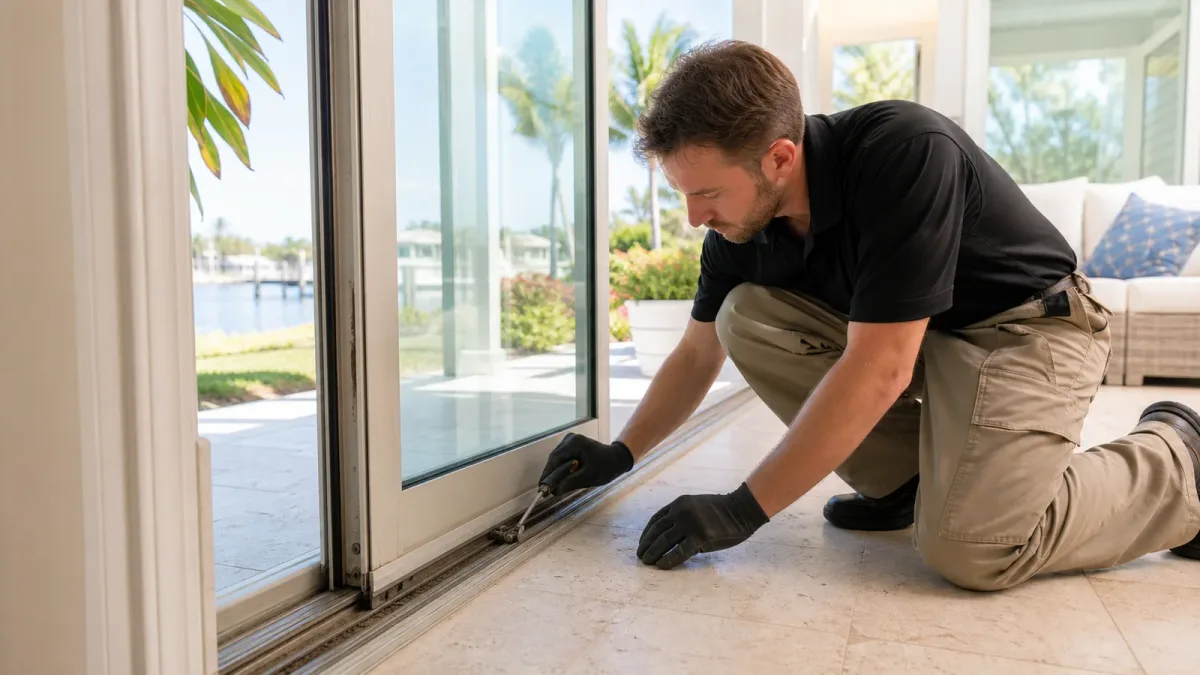
Sliding door rollers carry the weight of the whole panel. When they wear down, seize, flatten, or corrode, the door stops gliding and starts dragging across the track. That is when a simple annoyance can turn into damaged hardware, a rough threshold, and a door that no longer locks cleanly.
For Tampa Bay homes, roller failure is especially common on patio doors that face humidity, salt air, sand, and daily indoor-outdoor traffic. If your door feels heavier than it used to, professional roller replacement can often restore smooth movement without replacing the full door system.
Signs the rollers may be failing
The door takes two hands to move
A sliding door should not feel like it needs a shove every time you open it. Heavy movement from the first inch of travel often points to worn, seized, or corroded rollers under the panel.
This is different from one small sticky spot in the track. A door that feels heavy through the full opening usually needs the roller system checked.
The bottom of the door grinds or scrapes
Grinding is a warning sign because it means the panel is no longer riding cleanly. The rollers may be flat-spotted, rusted, or sitting too low, which can let the panel scrape the track.
If the scraping continues, the repair can expand from roller work into track repair because the damaged wheels can wear down the riding surface.
The door drops out of alignment
Worn rollers can make one side of the panel sit lower than it should. When that happens, the latch may miss the keeper, the handle may feel strained, and the door may need to be lifted before it locks.
That does not always mean the lock is the first failed part. Sometimes the real problem is panel height caused by roller wear.
The door moves worse after rain, humidity, or salty air
Florida conditions are hard on moving hardware. Moisture and salt air can corrode roller assemblies, while sand and patio debris can accelerate wear. A door near the water, lanai, pool deck, or high-use patio can decline faster than a door in a protected opening.
You see black dust, metal shavings, or broken wheel pieces
Debris in the lower channel can be a sign that the rollers are breaking down. Black residue, tiny metal fragments, or pieces of old wheel material usually mean the door should be inspected before more damage spreads into the track.
Why waiting can make roller problems more expensive
A failing roller does not just make the door harder to move. It changes how the entire panel sits in the opening. That can create a chain reaction:
- the panel drags across the bottom track
- the track becomes gouged, flattened, or rough
- the lock and keeper stop lining up
- the handle takes extra force every time the door opens
- the weather seal may stop closing evenly
That is why roller issues should not be treated as a one-part guess. Tampa Bay Sliding Doors checks the rollers, track, lock alignment, handle condition, and panel height together so the repair solves the cause instead of only quieting the symptom for a short time.
Patio door dragging, grinding, or taking two hands to open? Tampa Bay Sliding Doors can inspect the rollers, track, lock, and panel alignment and recommend the repair that protects the full door system.
Schedule roller replacementWhen roller replacement is usually the right repair
Roller replacement is often the right move when the glass and frame are still sound, but the panel feels heavy, noisy, or uneven. It can apply to standard sliding glass doors, lanai sliders, patio doors, and large multi-panel openings.
For patio-specific issues, the same symptoms may be handled through patio door roller replacement when the door is part of a lanai, pool deck, balcony, or main outdoor living area.
The goal is not just to make the door move again. The goal is to restore a smooth glide, protect the track, and help the lock line up without forcing the panel.
Why professional diagnosis matters
Sliding doors are heavy, and the visible symptom is not always the root cause. A door can feel heavy because the rollers failed. It can also feel heavy because the track is damaged, the panel is out of square, the lock is binding, or the handle hardware is under strain.
Professional service matters because the panel has to be supported, reset, adjusted, and tested as a system. If new rollers are installed while the track remains damaged, the door may still grind. If the panel height is not corrected, the lock may still miss the keeper.
Tampa Bay Sliding Doors stocks common roller assemblies and coastal-rated hardware for local service calls, then checks the full movement path before the visit is complete.
When to call Tampa Bay Sliding Doors
Schedule service when your sliding or patio door:
- takes two hands to open
- grinds, scrapes, or squeals along the bottom
- feels uneven from one side to the other
- needs to be lifted to lock
- leaves black dust or metal fragments in the track
- keeps getting worse after cleaning
- has visible corrosion around the lower hardware
Waiting usually gives the door more time to damage the track and strain the lock. If the frame is still solid, early service often keeps the repair focused on rollers, alignment, and any related track wear instead of a larger replacement conversation.
Final answer
If your sliding door is heavy, grinding, scraping, or no longer locking cleanly, worn rollers may be the cause. In Tampa Bay homes, humidity, salt air, sand, and daily patio use can wear rollers quickly, and forcing the door can spread damage into the track and hardware.
If your door is already dragging, request service online and Tampa Bay Sliding Doors can inspect the full system before the repair gets bigger.