
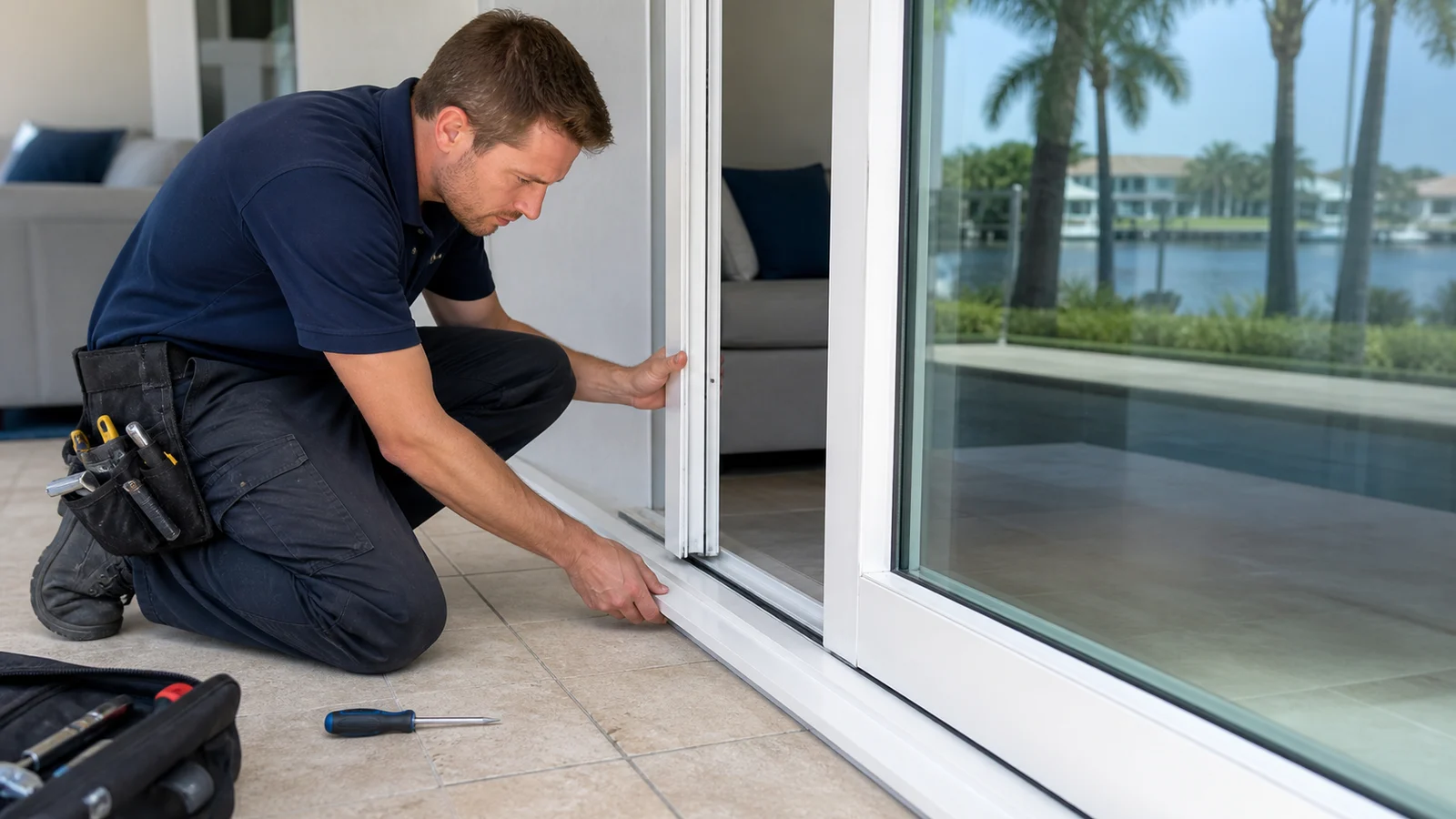
A sliding door that slips, jumps, leans, or feels like it is coming out of the bottom track should be treated as more than a nuisance. The panel is heavy, the glass needs to stay supported, and the lock only works correctly when the door sits square in the frame.
In Tampa Bay homes, an off-track sliding door often starts with worn rollers, a damaged track cap, corrosion, sand buildup, or repeated forcing after the door became hard to move. The visible symptom may be the panel jumping, but the real repair usually depends on how the rollers, track, lock, handle, and frame alignment are working together.
Signs your sliding door may be off track
Schedule service when you notice:
- the panel jumps, bumps, or drops while sliding
- the bottom edge rubs the track or threshold
- the door leans instead of sitting square in the opening
- one side of the panel looks lower than the other
- the door will not close flush against the frame
- the latch misses unless the panel is lifted or pushed
- the door feels like it could come loose when opened
- the track has metal shavings, black dust, rough spots, or visible dents
- the door gets worse after rain, humidity, or heavy patio use
These symptoms are common on older sliders, lanai doors, condo patio doors, pool-area sliders, and rental-property doors that get daily traffic. If the panel already feels unstable, it is time for a professional sliding glass door repair inspection.
Why an off-track door should not be forced
Forcing the panel can turn a repairable issue into a larger hardware problem. When the rollers are worn or the track surface is damaged, each shove adds pressure to the same weak points.
Waiting can lead to:
- deeper track grooves and threshold wear
- flat-spotted, seized, or broken rollers
- a panel that sits lower and drags harder
- lock and keeper misalignment
- extra strain on the handle and latch
- gaps that affect sealing, security, and weather performance
- a door that becomes unsafe for kids, guests, tenants, or customers to use
The door may still move today, but if it is riding unevenly, the repair path can get more expensive as the rollers and track continue damaging each other.
Common causes of off-track sliding doors
An off-track sliding door is usually a symptom of a system problem. Tampa Bay Sliding Doors looks for the cause before recommending parts.
Worn or failed rollers
Rollers carry the panel weight. When they flatten, corrode, crack, or lose adjustment, the panel can ride too low and begin scraping the track. A door that needs to be lifted before it closes often needs roller replacement as part of the repair.
Damaged or worn track surfaces
A bent, gouged, or flattened track can make the panel jump in one spot or drift out of alignment. Even new rollers will not glide correctly over a rough riding surface, which is why track repair may be needed with the roller work.
Patio door alignment problems
Large patio and lanai panels can shift from age, humidity, repeated use, or prior force. For patio openings, the repair may need a broader patio door repair diagnosis that checks the frame, panel travel, track, stops, rollers, and lock fit together.
Lock and keeper interference
Sometimes the panel feels off track near the closed position because the latch or keeper is binding. If the door closes crooked, the lock may miss or drag, making the panel feel stuck. A repair visit should check whether lock repair is part of the same alignment issue.
Sliding door jumping, rubbing, or slipping out of the track? Tampa Bay Sliding Doors can inspect the rollers, track, panel alignment, lock fit, and patio-door hardware so the repair addresses the cause instead of only the symptom.
Schedule off-track door repairWhat Tampa Bay Sliding Doors checks during service
An off-track service call should answer one practical question: why is the panel no longer riding straight?
The inspection may include:
- how the panel moves from fully open to fully closed
- whether the panel sits square and level in the frame
- roller condition, height, corrosion, and bearing movement
- track wear, dents, high spots, low spots, or damaged caps
- whether the door rubs at the bottom, side jamb, or lock side
- handle, latch, keeper, and lock alignment
- signs of water, sand, salt-air corrosion, or repeated forced operation
- whether patio-door track repair is needed for a lanai or pool-area opening
The goal is not just to put the panel back where it belongs for a day. The goal is to restore stable travel so the door glides, closes, seals, and locks without being lifted or shoved.
Tampa Bay conditions make off-track problems worse
Humidity, salt air, sand, rain, and heavy indoor-outdoor traffic are hard on sliding door hardware across Tampa, Clearwater, St. Petersburg, Largo, Brandon, Riverview, Palm Harbor, Dunedin, and nearby communities. Track debris can accelerate roller wear, and corrosion can make moving parts seize faster than expected.
That is why a door that jumps or slips after cleaning usually needs more than another wipe-down. The rollers, track surface, and alignment need to be checked together before the panel causes more damage.
When to call for off-track sliding door repair
Book service when the panel feels unstable, drags hard, jumps in the same spot, refuses to close squarely, or only locks after being lifted. These are repair-call symptoms because the weight of the door and the condition of the track both matter.
If your sliding door is slipping, rubbing, or coming off track, request service online and Tampa Bay Sliding Doors can diagnose the full movement system before the repair grows into a larger door problem.