
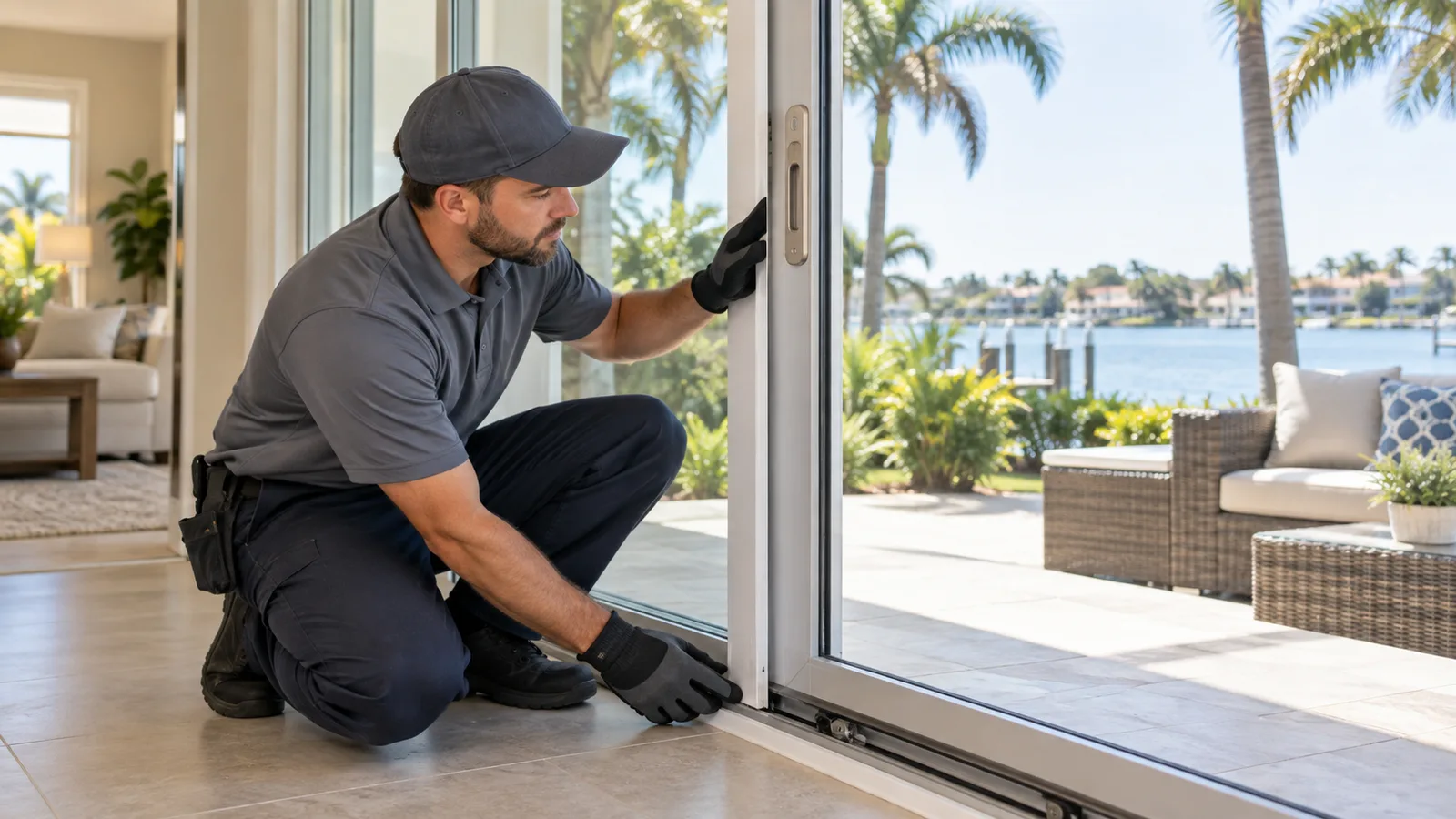
A sliding door should close into the frame without lifting, shoving, or fighting the lock. When the panel sits crooked, leaves a visible gap, rubs the side jamb, or misses the latch, the door is usually telling you the moving system is out of alignment.
In Tampa Bay homes, alignment problems often show up after months of dragging rollers, a worn track cap, corrosion, heavy patio use, or repeated force from trying to make a stubborn door close. The panel may still move, but if it no longer sits square, the lock, handle, rollers, and track can all start wearing each other down.
Signs your sliding door is out of alignment
Schedule service when you notice:
- the door closes at an angle instead of sitting flush
- daylight, humid air, or insects coming through a side gap
- the latch misses the keeper unless the panel is lifted
- the lock only works after the door is pushed or slammed
- the panel rubs the frame near the top, side, or bottom
- one edge of the door looks lower than the other
- the handle feels strained when pulling the door closed
- the door moves better in one direction than the other
- grinding, scraping, or bumping near the track
These symptoms are common on patio sliders, pool-area doors, lanai doors, condo balcony sliders, and high-traffic rental doors. If the door already needs force to close, it is time for a professional sliding glass door repair inspection before the alignment issue damages more parts.
Why alignment problems spread
A misaligned sliding door rarely stays isolated. The panel is heavy, and every forced close puts pressure on the hardware that is already struggling.
Waiting can lead to:
- flat-spotted, seized, or overloaded rollers
- rough track wear from the panel riding unevenly
- latch and keeper damage from repeated misses
- loose, cracked, or strained handle hardware
- gaps that affect sealing, security, and daily comfort
- a door that becomes harder for family, guests, tenants, or customers to use safely
The most expensive version of this problem usually starts with a door that still “kind of works.” If the panel is no longer traveling square, the repair should address the cause, not just the symptom you see at the latch.
Common causes of sliding door alignment issues
Alignment repair starts with finding out why the panel is no longer sitting correctly in the opening.
Worn rollers can drop the panel
Rollers carry the door’s weight. When they flatten, corrode, crack, or lose adjustment, one side of the panel can sit low. That can make the door drag, miss the keeper, rub the threshold, or feel like it needs to be lifted before it locks. In that case, roller replacement may be part of the alignment repair.
Track wear can change how the door rides
A rough, grooved, bent, or flattened track can push the panel out of its normal path. Even a small damaged section can make the door bump, lean, or fail to close cleanly. A technician may need to inspect whether track repair or a track cap is needed with the roller work.
Lock and keeper fit can reveal a deeper issue
Sometimes the first sign of alignment trouble is a lock that will not catch. The latch and keeper need to meet at the right height and angle. If the panel has dropped or shifted, lock repair may only hold if the movement problem is corrected too.
Patio openings can shift over time
Large patio doors get frequent use and are exposed to humidity, rain, sand, salt air, and temperature swings. For lanai and pool-area doors, a broader patio door repair visit may need to check the panel, frame contact, track, rollers, stops, handle, and lock together.
Sliding door closing crooked, leaving gaps, or missing the latch? Tampa Bay Sliding Doors can inspect the panel alignment, rollers, track, lock, keeper, and handle so the repair fixes the reason the door will not close square.
Schedule alignment repairWhat Tampa Bay Sliding Doors checks during service
An alignment service call should answer one practical question: what is making the panel stop sitting square in the frame?
The inspection may include:
- how the panel moves from fully open to fully closed
- whether the panel sits level at the top, bottom, and latch side
- roller condition, height, corrosion, and bearing movement
- track wear, dents, caps, rough spots, or low areas
- whether the door rubs the threshold or side jamb
- latch, keeper, lock, and handle alignment
- whether handle replacement is needed because the hardware has been strained
- whether patio-door track repair is needed for a lanai, pool, or balcony opening
The goal is a door that glides, closes flush, seals better, and locks without being lifted, slammed, or forced.
Tampa Bay conditions make alignment issues worse
Humidity, salt air, sand, rain, and heavy indoor-outdoor use are hard on sliding door hardware across Tampa, Clearwater, St. Petersburg, Brandon, Riverview, Largo, Palm Harbor, Dunedin, and nearby communities. A door that is slightly out of alignment can get worse quickly when corrosion or track grit adds resistance.
That is why alignment symptoms should not be ignored. If the panel no longer closes square, the lock and handle may be reacting to a movement problem that started lower in the door.
When to call for sliding door alignment repair
Book service when your door closes crooked, rubs the frame, leaves a gap, misses the latch, locks only when forced, or feels like it has dropped on one side. These are repair-call symptoms because the panel, track, rollers, and lock all need to work together.
If your sliding door is no longer closing squarely, request service online and Tampa Bay Sliding Doors can diagnose the full system before the alignment problem turns into a larger repair.