
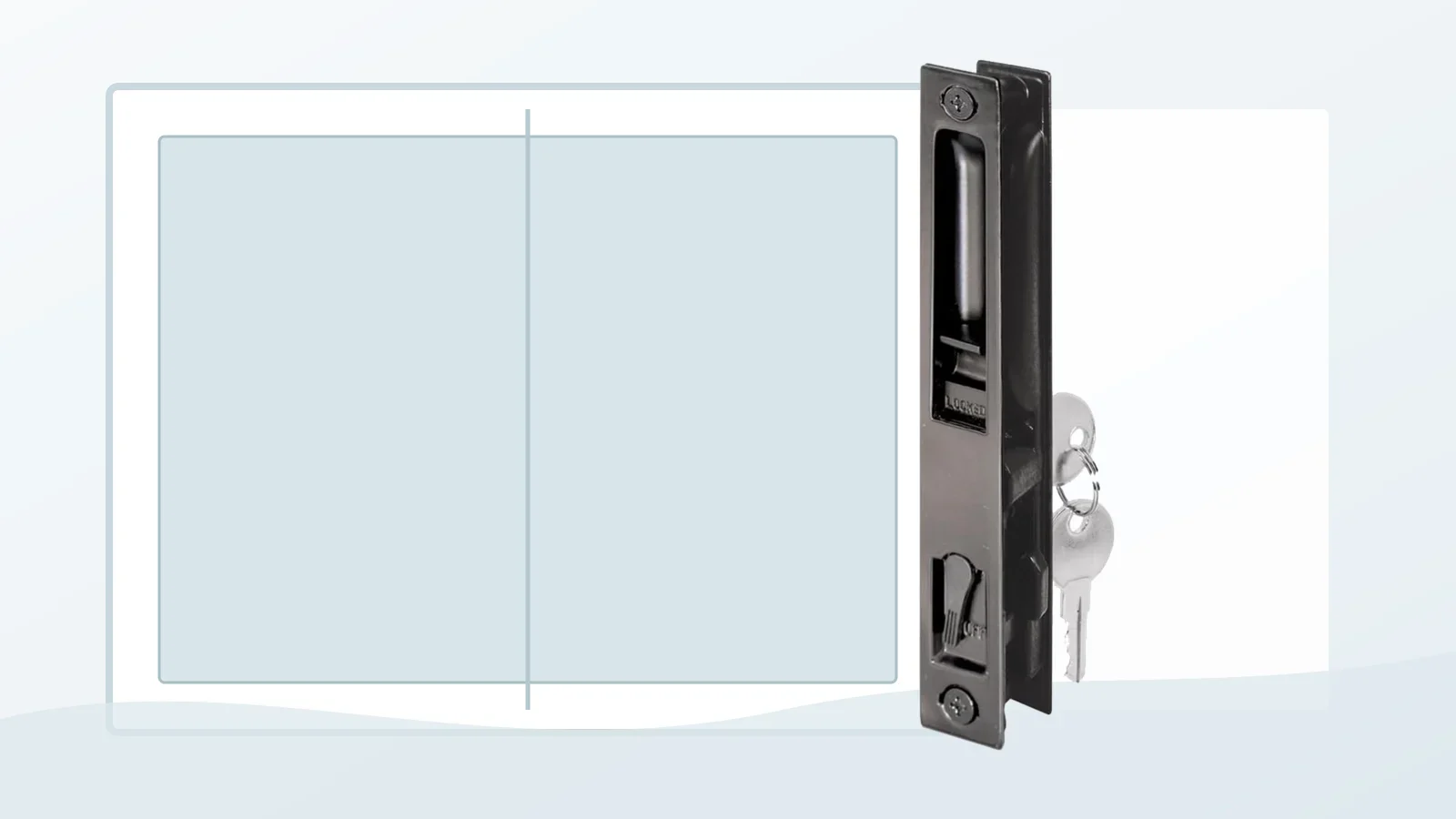
A sliding door latch should catch cleanly when the panel closes. If the thumb turn feels stiff, the latch misses the keeper, or the door only locks after being lifted, pushed, or slammed, the latch is usually reacting to a larger hardware or alignment problem.
In Tampa Bay homes, latch problems often come from worn lock parts, a shifted keeper, handle strain, roller drag, track wear, corrosion, or a door panel that no longer sits square in the frame. Replacing the visible part without checking the full door can leave the same problem behind.
Signs your sliding door latch needs repair
Latch trouble can look like a small inconvenience at first. Schedule service when you notice:
- the latch clicks but does not hold
- the thumb turn moves but the door still feels unsecured
- the latch only catches when the panel is lifted or shoved
- the door closes but leaves a gap at the frame
- the keeper looks worn, loose, or out of line
- the handle flexes or feels strained when locking
- the door is harder to move than it used to be
- corrosion around the lock, latch, keeper, or screws
- a lock that works some days but not others
These are repair-call symptoms because the latch, keeper, rollers, track, and handle all affect each other. A door that does not close squarely may make a good latch feel broken.
Why latch problems are often alignment problems
The latch and keeper have to meet at the right height and angle. When the sliding panel drops on worn rollers, rides over a rough track, or shifts in the frame, the latch can miss the keeper even if the lock body is still intact.
That is why a proper sliding door lock repair visit should check more than the lock. The technician needs to see how the panel moves, how it closes, and whether the latch lines up naturally before recommending parts.
Common connected causes include:
- worn rollers that lower the panel
- a rough or damaged track that changes how the door seats
- a loose handle that twists the latch action
- a keeper that has shifted from repeated force
- corrosion inside the lock body
- frame movement from age, humidity, or heavy daily use
If the panel drags, roller replacement or track service may be part of the same fix.
Sliding door latch missing, sticking, or refusing to stay locked? Tampa Bay Sliding Doors can inspect the latch, keeper, handle, rollers, track, and panel alignment so the repair fixes the reason the door will not secure cleanly.
Schedule latch repair serviceRisks of waiting on a latch that will not catch
A weak latch is not just a hardware annoyance. It can affect security, sealing, and the daily strain on the whole door.
Waiting can lead to:
- a door that is easier to pull open after closing
- latch and keeper wear from repeated forcing
- a loose or cracked handle from extra pressure
- more roller and track damage as the panel is shoved into place
- gaps that let in humid air, insects, and drafts
- a door that becomes unreliable for family, guests, tenants, or customers
If the latch only works when someone lifts the panel, the door is already asking for a full hardware diagnosis.
What Tampa Bay Sliding Doors checks during latch service
Tampa Bay Sliding Doors starts with how the door behaves, not just the name of the part. During latch or lock service, the inspection may include:
- latch action, thumb turn movement, and keyed lock function
- keeper position and wear
- interior and exterior handle condition
- whether the panel closes squarely into the frame
- roller height, corrosion, and rolling resistance
- track wear, rough spots, or low areas
- whether handle replacement is needed with the latch repair
- whether connected patio door repair work can restore smoother operation
The goal is a door that closes, catches, locks, and moves without forcing the hardware.
Tampa Bay conditions are hard on latch hardware
Humidity, salt air, sand, and frequent patio use can wear sliding door hardware faster in Tampa, Clearwater, St. Petersburg, Largo, Palm Harbor, Brandon, Riverview, and nearby communities. A latch may start sticking because corrosion is building inside the lock body or because the rollers and track have made the panel harder to seat.
Those same conditions can affect window locks and sash hardware. If windows in the home are also hard to lock, dropping, or not sealing correctly, window hardware repair may be worth scheduling before the issue spreads.
When to call for sliding door latch repair
Book service when your sliding door:
- will not latch consistently
- locks only after the panel is lifted or pushed
- feels loose or unsecured after closing
- has a stiff thumb turn or worn keeper
- has a strained handle or visible corrosion
- is also grinding, dragging, or catching on the track
- is used as a main patio, pool, rental, or business entry
These issues are best handled before the door stops securing at all.
Get sliding door latch repair in Tampa Bay
If your sliding door will not catch, will not stay locked, or only latches when forced, Tampa Bay Sliding Doors can diagnose the full latch, keeper, lock, handle, roller, and track system.
For a door that is already unreliable, request service online and get the latch issue checked before it turns into a larger hardware repair.