
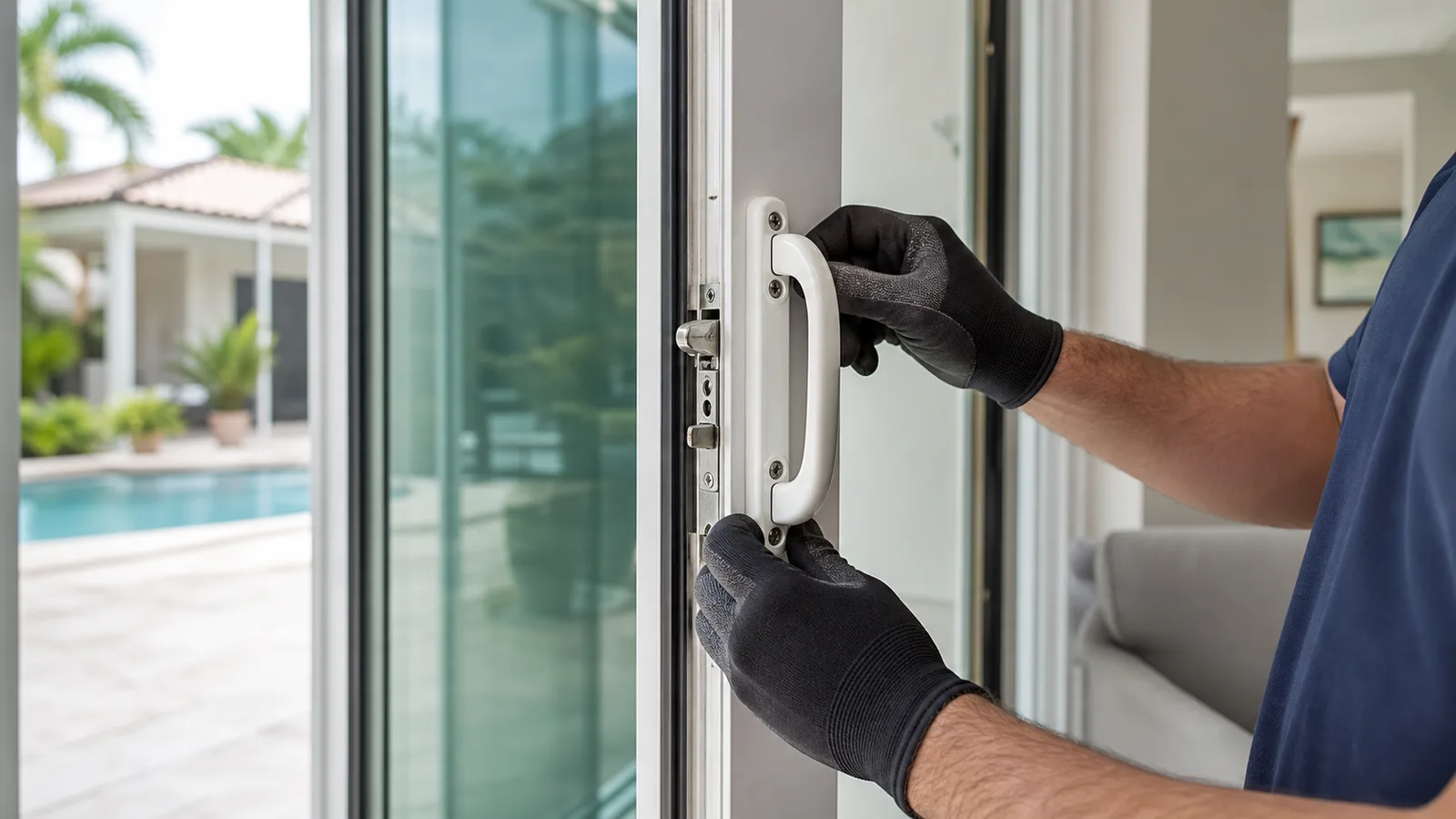
A sliding door lock or handle problem is more than an inconvenience. When the latch misses the keeper, the handle feels loose, or the panel has to be lifted to lock, the door is telling you the hardware is no longer working with the rest of the system.
In Tampa Bay homes, that can happen because of worn locks, loose handles, corrosion, roller wear, track damage, or panel misalignment. The important part is diagnosing the full door system before replacing one visible part and leaving the real cause in place.
Why sliding door hardware problems should not be ignored
The lock, keeper, handle, rollers, and track all have to line up. If one part shifts, the door may still close, but it can stop sealing tightly or locking reliably.
That creates practical problems:
- the latch does not catch without lifting or pushing the panel
- the handle wiggles, cracks, or feels weak
- the door closes but leaves a gap at the frame
- the lock works one day and sticks the next
- the panel feels harder to move near the locked position
- the door no longer feels secure at night or when you leave the house
If the frame and glass are still sound, the answer is often targeted sliding glass door repair rather than full door replacement.
Signs the lock or handle may need repair
The latch misses the keeper
If the latch no longer lines up with the strike or keeper, the problem may be the lock, the keeper position, or the door alignment. Replacing the lock without checking the rollers and track can leave the door with the same issue.
The handle feels loose or cracked
A loose handle can make a heavy patio door harder to control. If screws no longer hold cleanly, the pull is cracked, or the handle flexes when you slide the panel, handle replacement can restore a safer grip.
The lock sticks or will not turn smoothly
Locks can bind when the latch is worn, the keeper is out of position, or corrosion is affecting the internal mechanism. In those cases, lock repair should include an alignment check, not just a part swap.
The door only locks when you lift it
Needing to lift the panel usually points to a movement problem. Worn rollers, a damaged track, or a sagging panel can throw the lock out of alignment even when the lock hardware itself still looks usable.
The door feels secure only when forced
Slamming, shoving, or forcing the lock can damage the handle, keeper, and frame. It can also hide a roller or track issue that keeps getting worse.
Sliding door not locking cleanly? Tampa Bay Sliding Doors can inspect the handle, latch, keeper, rollers, and track so the repair fixes the cause, not just the symptom.
Schedule lock and handle serviceWhy hardware repair often needs a full-door diagnosis
Sliding door hardware rarely fails in isolation. A lock can bind because the panel has dropped. A handle can loosen because the door takes too much force to move. A keeper can seem wrong because the track or rollers are no longer holding the panel at the right height.
That is why a proper service visit should check:
- handle condition and fastener fit
- mortise lock or latch operation
- keeper alignment
- panel height and reveal
- roller condition
- track wear or corrosion
- whether the door seals evenly when closed
This is especially important for patio door repair in Tampa, Clearwater, St. Petersburg, Largo, Palm Harbor, and nearby coastal areas where humidity and salt air accelerate hardware wear.
What about window locks and hardware?
Similar symptoms can show up on windows. If a window will not lock, will not stay open, drops suddenly, or feels loose at the sash, the problem may be balances, latches, guides, or other hardware. In that case, window repair can restore safer operation without replacing the whole opening.
The same rule applies: diagnose the moving system before assuming the visible lock is the only failed part.
When to book service
Book service when your sliding door:
- does not latch without extra force
- has a loose, cracked, or uncomfortable handle
- locks only when the panel is lifted
- leaves a visible gap after closing
- feels heavy near the lock side
- has corroded or worn hardware
- no longer feels secure
Waiting can turn a small hardware issue into a bigger repair. A misaligned lock can strain the handle, damage the keeper, and make the door harder to seal.
Final answer
If your sliding door will not lock cleanly, has a loose handle, or needs to be lifted or shoved into place, the hardware should be inspected before the problem spreads. The right repair may be a new lock, new handle, keeper adjustment, roller work, track repair, or a combination of those items.
If your patio door is already difficult to secure, request service online and Tampa Bay Sliding Doors can diagnose the lock, handle, rollers, and track together.