
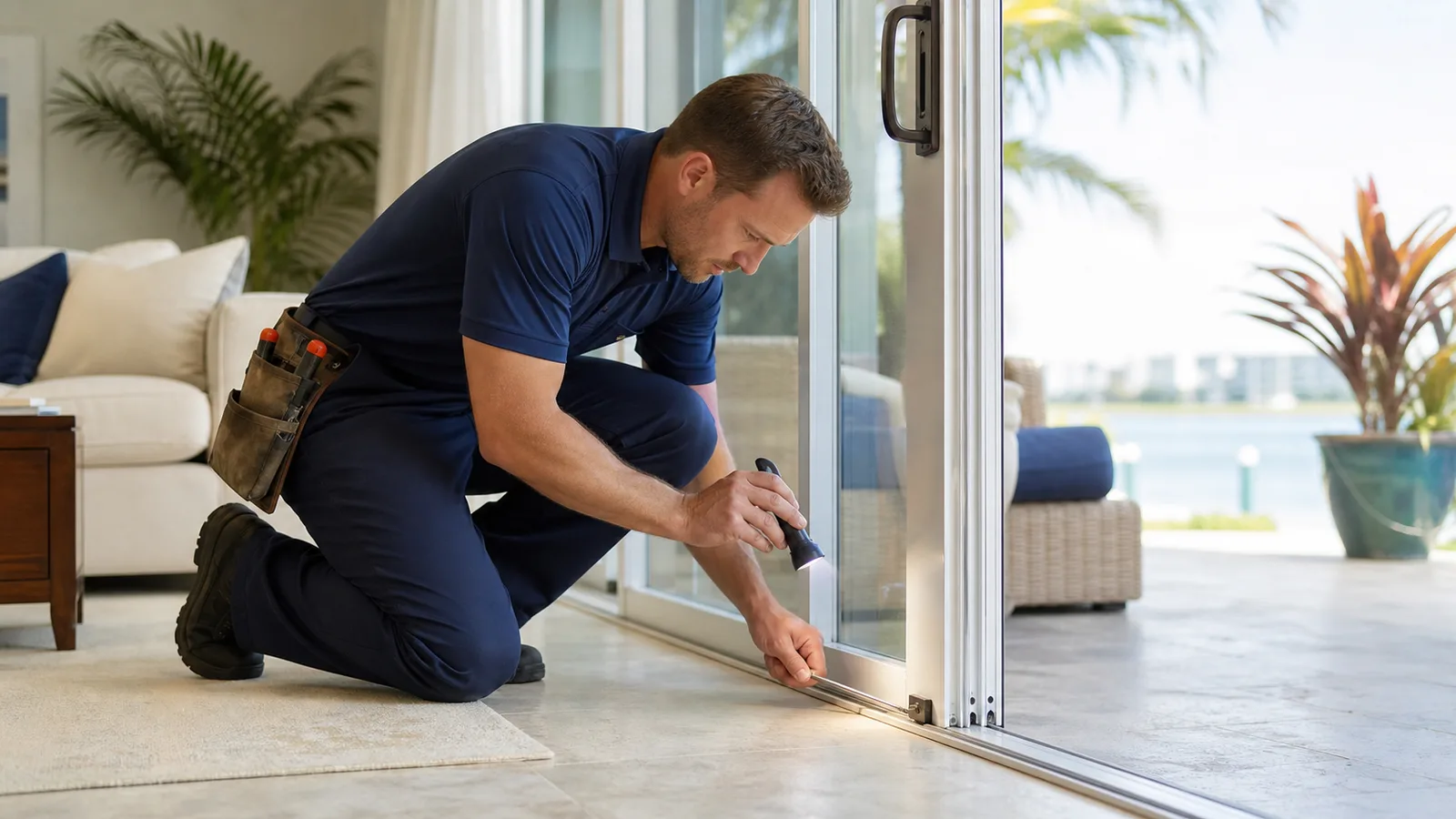
A patio door should open smoothly, close evenly, and lock without a fight. When it starts dragging, grinding, sticking, or needing extra force, the problem is usually deeper than surface dirt in the track.
In Tampa Bay homes, patio doors deal with humidity, salt air, sand, heavy daily use, and outdoor debris. Those conditions can wear down rollers, damage the track, throw off the lock, and strain the handle. The door may still move for a while, but forcing it usually makes the repair bigger.
Why patio door problems should be diagnosed early
Most patio door issues are connected. A worn roller can scrape the track. A damaged track can make a good roller fail. A dropped panel can make the lock miss the keeper. A hard-to-move door can loosen the handle because every opening takes more force than it should.
That is why the right answer is often targeted patio door repair instead of replacing the whole door system. If the glass and frame are still sound, Tampa Bay Sliding Doors can inspect the moving parts, identify the failure point, and repair the components causing the problem.
Ignoring the issue can lead to:
- a heavier door that takes two hands to open
- grinding at the bottom track
- damaged rollers or flattened roller wheels
- latch and keeper misalignment
- loose or cracked handles
- air, water, or pest gaps around the panel
- a door that feels unsafe or unreliable
Signs your patio door needs repair
The door is hard to open
A patio door that used to glide but now takes effort is usually showing a roller, track, or alignment problem. Cleaning loose debris may help a little, but a door that still feels heavy after basic maintenance should be inspected before the panel starts scraping the track.
If the main symptom is weight or resistance, the issue may overlap with roller replacement or a full sliding glass door repair diagnosis.
The bottom track grinds or scrapes
Grinding is a warning sign. It can mean the rollers are seized, the panel has dropped, or the track is damaged enough that the door no longer has a clean riding surface.
This is where track repair becomes important. New rollers will not perform correctly if the track is too worn, corroded, or uneven.
The door sticks in one spot
If the patio door catches at the same point every time, the track may have a dent, raised spot, low area, or damaged cap. The panel may also be out of square. Forcing the door through that spot can damage the rollers and make the lock alignment worse.
The lock does not line up
When the latch misses the keeper, the first assumption is often that the lock failed. Sometimes that is true. Other times the panel has dropped because of roller or track wear, which makes the lock look like the problem even when the real issue is movement and alignment.
Tampa Bay Sliding Doors checks the lock, keeper, handle, rollers, and track together so lock repair does not become a temporary part swap.
The handle feels loose or strained
A loose patio door handle is often a symptom of force. If the door is heavy, people pull harder. Over time, that strain can loosen screws, crack the pull, or make the handle feel unsafe.
If the handle is damaged, handle replacement may be needed. But the door should still be checked for the reason the handle was taking so much pressure in the first place.
Patio door dragging, grinding, or refusing to lock cleanly? Tampa Bay Sliding Doors can inspect the rollers, track, handle, lock, and panel alignment so the repair fixes the cause, not just the symptom.
Schedule patio door repairWhy Tampa Bay conditions are tough on patio doors
Homes in Tampa, Clearwater, St. Petersburg, Largo, Palm Harbor, Brandon, Riverview, and nearby coastal areas expose patio doors to a rough mix of moisture, salt air, sand, and frequent indoor-outdoor traffic.
That environment can corrode hardware, collect grit in the bottom track, and wear down moving parts faster than homeowners expect. Even if the door looks fine from across the room, the rollers, track, lock, and handle may already be fighting each other.
This is also why patio door repair should not be treated as a single-part guess. A smooth repair depends on the full system working together.
What Tampa Bay Sliding Doors checks during service
A proper patio door diagnosis looks beyond the obvious symptom. Depending on what the door is doing, the technician may check:
- roller condition and panel height
- bottom track wear, corrosion, and damage
- whether the panel is square in the opening
- lock and keeper alignment
- handle condition and fastener fit
- weatherstripping and closing gaps
- corrosion around hardware and adjustment points
- whether nearby windows have similar hardware issues
If your windows are also hard to open, will not stay up, or will not lock, window repair may be needed for balances, latches, guides, or other hardware. The same rule applies: diagnose the moving system before assuming the visible part is the only failed part.
When to call for patio door repair
Book service when your patio door:
- takes extra force to open or close
- grinds, scrapes, or squeals at the bottom
- sticks in one spot along the track
- needs to be lifted to latch
- has a loose handle or unreliable lock
- leaves a visible gap when closed
- feels worse after cleaning the track
- has visible corrosion or track wear
Waiting usually does not save money. A dragging patio door can damage the track, destroy the rollers, strain the handle, and make the lock harder to align.
Final answer
If your patio door is hard to open, noisy, uneven, or difficult to lock, the safest move is a full repair diagnosis before more parts wear out. The issue may be rollers, track damage, lock alignment, handle hardware, or a combination of those problems.
If your door is already dragging or refusing to close cleanly, request service online and Tampa Bay Sliding Doors can inspect the patio door system before the repair becomes larger.